Advanced Utility Planning

What Developers Need to Know About Dry Utilities Coordination
Most developers spend a lot of time thinking about schedules, budgets, grading, paving, and vertical construction. But one area that can quietly impact the entire timeline is dry utility coordination.
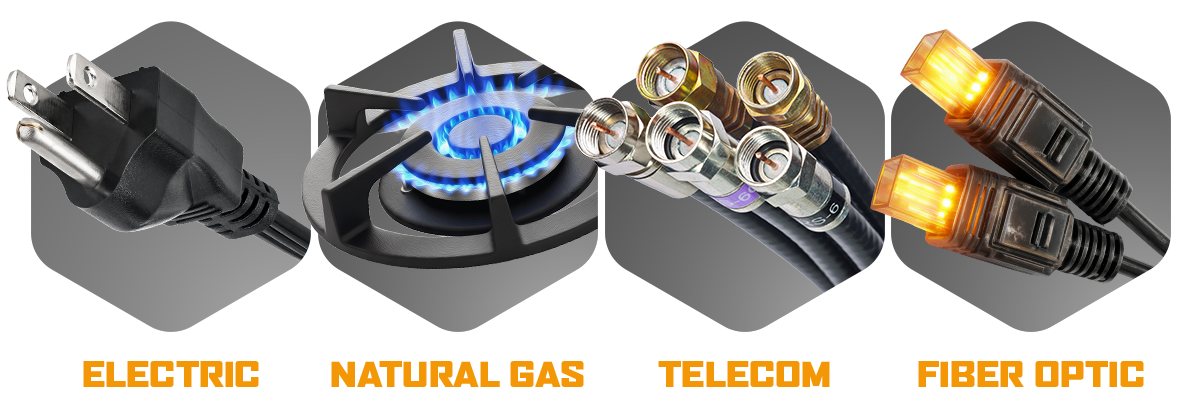
Electric. Gas. Telecommunications. Fiber.
These utilities are critical to every development, but coordinating them takes more than simply sending plans over and waiting for a response. In Texas — especially across fast-growing areas in DFW — dry utility coordination has become one of the most important pieces of keeping a project on track.
And when it’s handled late, the delays tend to show up everywhere else. Industry research consistently points to coordination and planning inefficiencies as a major contributor to project delays and cost overruns.[1]
⚡ Dry Utilities Touch Nearly Every Phase of Development
Unlike some portions of construction that happen in isolated phases, dry utilities overlap with almost everything.
Roadways, paving, water, sewer, storm drainage, lot development, vertical construction, inspections — all of it connects back to utility coordination in some way.
That’s why timing matters so much.
When electrical, gas, communications, and fiber providers aren’t aligned early, projects often run into:
🔴 Delayed service installation
🔴 Utility conflicts in the field
🔴 Rescheduled inspections
🔴 Rework due to changing layouts
🔴 Schedule compression late in the project
Most of the time, these issues don’t come from one major mistake. They come from small coordination gaps that grow over time — a challenge widely recognized throughout the construction industry.[2]
🧭 Coordination Starts Earlier Than Most Realize
One of the biggest misconceptions in development is that dry utility coordination begins once underground work starts.
In reality, successful projects begin coordinating much earlier.
That includes reviewing utility layouts, understanding easement requirements, identifying conflicts, coordinating schedules between providers, and making sure everyone involved is working from the same plan.
Because once crews are in the field, changes become more expensive — and more disruptive.
Research from the construction industry consistently shows that projects with strong pre-construction planning and early coordination perform significantly better in both cost and schedule outcomes.[3]
The projects that move efficiently are usually the ones where dry utility planning started long before installation began.
📈 Texas Growth Is Putting More Pressure on Utility Coordination
North Texas continues to grow at an aggressive pace. New residential communities, commercial developments, industrial projects, and municipal expansions are all competing for the same utility resources.
That means franchise utilities and inspectors are balancing more volume than ever before.
As activity increases, developers benefit from partners who already understand the coordination process and maintain established working relationships across utility providers.
That familiarity can help streamline communication, reduce delays, and keep projects moving when schedules tighten. Federal transportation and infrastructure guidance identifies utility conflicts and coordination gaps as one of the leading causes of delays on infrastructure projects.[4]
🤝 Why Developers Are Looking for More Than a Utility Installer
There’s been a noticeable shift in recent years.
Developers aren’t just looking for someone to install infrastructure anymore. They’re looking for teams that understand how infrastructure affects the entire project lifecycle.
Because dry utility coordination isn’t just about putting conduit in the ground. It’s about sequencing. Communication. Planning ahead. Anticipating conflicts before they become field problems.
That’s where experience matters.
At Venus Construction, we’ve spent decades coordinating dry utility infrastructure across Texas, and we’re proud to be WAS-approved for Atmos Energy, Oncor, Spectrum, and AT&T — helping developers navigate the coordination process from early planning through installation.
That kind of coordination doesn’t happen by accident. It comes from experience, communication, and understanding how all the moving parts fit together.
💪 Strong Coordination Keeps Projects Moving
When dry utility coordination is handled correctly, most people never notice it.
Crews stay productive. Inspections stay aligned. Other trades continue moving. Schedules hold together.
That’s usually the result of:
Early involvement
Clear communication between stakeholders
Realistic scheduling
Understanding utility-provider requirements
Consistent coordination throughout the project
Good coordination rarely gets attention. But poor coordination gets everyone’s attention fast.
📍 Plan Early. Stay Aligned. Keep Moving.
As Texas continues to grow, dry utility coordination will only become more important to successful site development.
The projects that stay ahead aren’t necessarily the simplest ones. They’re the ones where planning started early and communication stayed consistent from beginning to end.
At Venus Construction, we work alongside developers, municipalities, and general contractors across Texas to help keep projects aligned from the ground up.
If you’re preparing an upcoming development or infrastructure project, contact Venus Construction to request a bid and start the coordination process early.
Footnotes
[1]McKinsey & Company. “Reinventing Construction: A Route to Higher Productivity.”
[2] Associated General Contractors of America. “Managing Construction Risk.”
[3] Construction Industry Institute. “Pre-Project Planning: Impact on Cost and Schedule.”
[4] Federal Highway Administration. “Utility Coordination and Accommodation.”