👁️ Managing the Unseen
What Happens When Water Has Nowhere to Go?
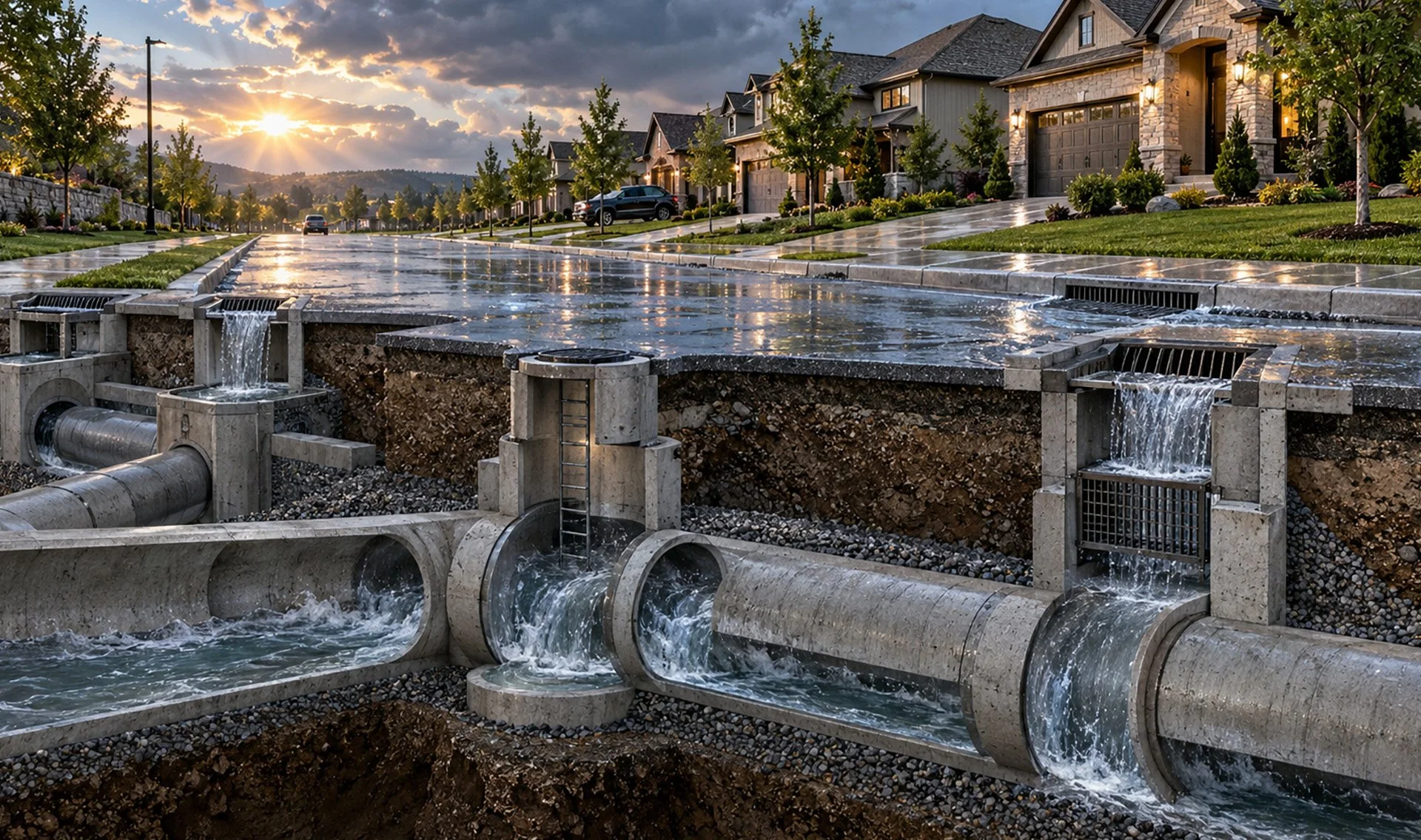
Stormwater infrastructure is easy to overlook—until the moment it matters most.
On a clear day, a finished development can look almost effortless. Streets are dry. Parking lots are clean. Homes and buildings sit neatly above landscaped sites.
Then the rain comes.
Suddenly, every curb inlet, storm line, junction box, headwall, detention system, and carefully established grade is being asked to do exactly what it was designed and built to do: move water away from the places it doesn’t belong.
And when water has nowhere to go, problems can show up quickly.
🔀 Water Always Finds a Path
Stormwater doesn’t care about property lines, schedules, paving, landscaping, or construction milestones. Once it begins moving, gravity is going to take it somewhere.
A well-planned drainage system gives that water a controlled path.
Without one—or when portions of that system aren’t properly coordinated—the results can include ponding, erosion, flooded roadways, overwhelmed structures, damaged improvements, and complications that extend far beyond the location where the water first collected.
That’s why storm drainage isn’t simply another line item on a civil plan. It is one of the systems protecting everything being built around it.
🫥 Most of the System Will Eventually Disappear
Some of the largest infrastructure installed on a development may ultimately become some of the least visible.
Reinforced concrete pipe. Box culverts. Junction boxes. Inlets. Headwalls. Underground connections.
Crews can spend weeks or months installing infrastructure that, once the project is finished, most people will never know is there.
That invisibility is actually the goal.
When the system is doing its job, rain falls, water moves where it is supposed to go, and life above ground continues with very little thought about what is happening underneath it.
📇 The Details Matter Before the First Storm
Storm systems aren't isolated pieces of pipe. They depend on elevations, grades, connections, structures, surrounding utilities, site conditions, sequencing, and the work of multiple teams coming together correctly.
A conflict underground can affect everything that follows above it.
That makes coordination especially important early in a project—when changes are generally far easier to manage than they are after roads are paved, landscaping is installed, and buildings are occupied.
Experienced contractors learn to look beyond the individual piece being installed and understand how that piece fits into the larger system.
🌧️ Rain Has a Way of Testing the Work
There are plenty of parts of a development that can look complete before they are truly tested.
Storm infrastructure is different.
Eventually, the weather performs its own inspection.
Heavy rain can reveal where water collects, how quickly it moves, whether temporary drainage is working during construction, and how effectively completed systems are managing runoff.
It’s one reason drainage requires attention throughout construction—not simply when the storm pipe is being installed.
🛡️ What’s Underground Protects What’s Above
Developers understandably spend enormous amounts of time thinking about what people will eventually see: buildings, streets, landscaping, amenities, entrances, and finished spaces.
But much of what protects those investments is buried beneath them.
The best stormwater systems may never get noticed by the people who live, work, shop, or travel through a finished development.
They’ll simply know the street didn’t flood.
The parking lot drained.
The site held up when the weather turned.
And sometimes, that is the clearest sign that the infrastructure underneath was built right.
Because when water has somewhere to go, everything above it is better protected.
TRUST IS OUR BRAND
If you’re preparing an upcoming development or infrastructure project, click here to request a bid and start the coordination process early.