🧩 The Utility Puzzle
Why Coordination Matters in Land Development
When people think about infrastructure, they often picture pipes in the ground, crews in trenches, and equipment moving dirt. What many don't see is the coordination required to make all those systems work together.
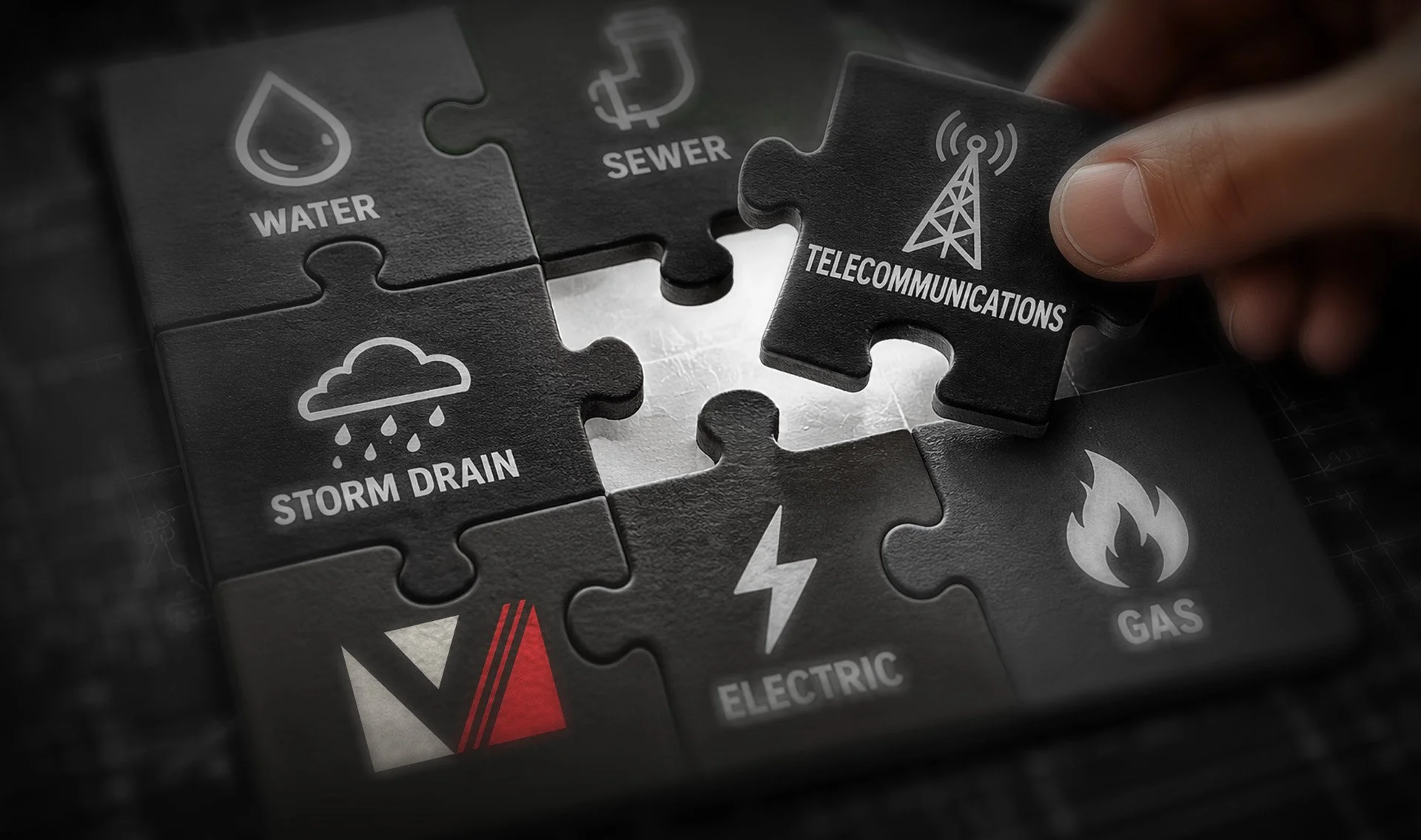
Every successful development relies on a network of utilities that must fit within the same project footprint. Water, sewer, storm drainage, electric, natural gas, and telecommunications infrastructure all serve a critical purpose—but they don't install themselves independently of one another.
Like pieces of a puzzle, every utility must fit together correctly before a project can move forward.
🎯 Every Piece Has a Purpose
No single utility system can support a development on its own.
Water delivers a reliable supply to homes and businesses. Sewer systems safely transport wastewater. Storm drainage protects property and roadways during heavy rainfall. Electric, gas, and telecommunications services provide the infrastructure modern communities depend on every day.
When one piece is missing, the puzzle isn't complete.
The challenge is ensuring all of those systems can coexist within limited space while meeting municipal requirements, utility standards, and project schedules.
📅 Why Coordination Is Critical
Utility corridors are often crowded. Multiple systems may cross one another, share easements, or compete for limited installation space.
Without proper coordination, projects can encounter:
🛑 Utility conflicts
🛑 Design revisions
🛑 Schedule delays
🛑 Additional costs
🛑 Rework in the field
The earlier these challenges are identified, the easier they are to address.
That's why utility coordination has become one of the most important parts of successful project execution.
⏳ The Best Time to Solve the Puzzle
The most effective utility coordination happens long before construction begins.
Planning teams, engineers, developers, municipalities, franchise utilities, and contractors all play a role in identifying potential challenges and developing solutions before crews mobilize to the field.
By reviewing plans, coordinating utility locations, evaluating constructability, and communicating early, project teams can reduce surprises and create a smoother path to construction.
The goal isn't simply to install utilities. The goal is to create an infrastructure system that functions as a whole.
👥 Building Communities Starts Underground
Long before roads are paved and buildings are occupied, underground infrastructure lays the foundation for future growth.
Every utility system contributes to the success of the development, but the real value comes from how those systems work together.
At Venus Construction, we understand that successful projects require more than installation expertise. They require coordination, communication, and a commitment to seeing the entire picture—not just one piece of the puzzle.
Because when every piece fits together correctly, projects move forward more efficiently, communities grow, and everyone benefits.
If you’re preparing an upcoming development or infrastructure project, click here to request a bid and start the coordination process early.